Gel allergies
What you need to know
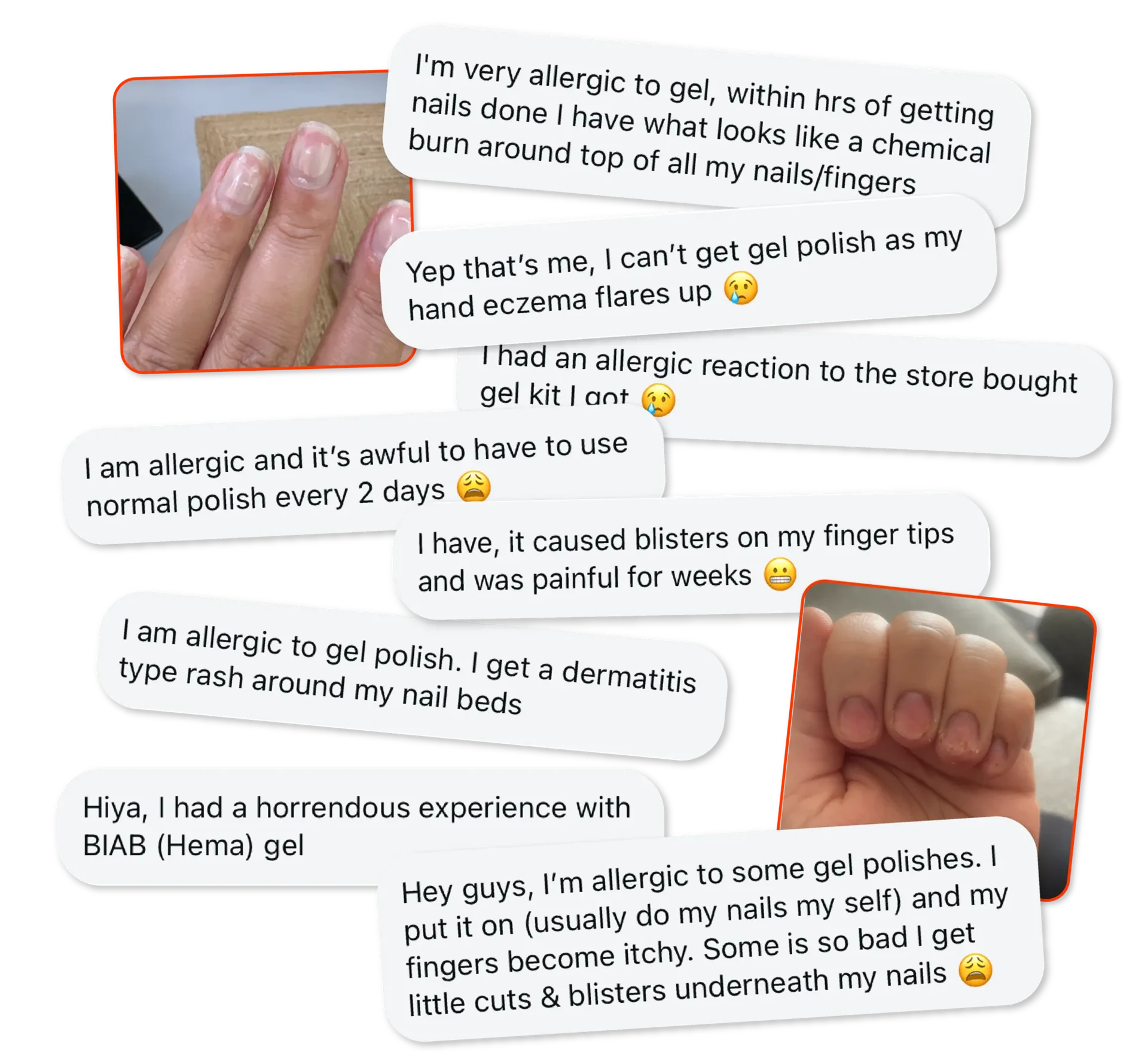
If you've been dealing with allergic reactions from gel nails and want answers, you're in the right place. Here's what's going on, what's causing it, and what your options are if you still want glossy, salon-quality nails.
Gel nails have been around since the 1980s, and for good reason — the shine is strong and the wear time is impressive. But there's a side of gels that isn't talked about enough: allergic reactions.
If you've experienced one, you'll know it's not just inconvenient. It can be genuinely uncomfortable — and in some cases, serious.
Why gel allergies can be serious
Allergic reactions aren't always mild.
They can show up as redness, swelling and itching around the nails. In more severe cases, blisters, peeling and even lifting of the nail plate can occur.
What makes this especially frustrating is that once you develop an allergy, it can become long-term. Repeat exposure can lead to stronger reactions over time.
And because the same allergen groups can appear in other contexts (including some dental materials and adhesives), this goes beyond nails for many people.
Are allergic reactions to gel manicures on the rise?
Yes — and we're seeing it more frequently than ever.
There's growing evidence linking the rise in gel allergy cases to increased exposure, particularly from at-home use and improper application. One of the biggest risk factors is uncured gel touching skin, often repeatedly.
At-home kits became especially popular during the pandemic, and while they can be convenient and cheap, it's easy to make mistakes:
- Product flooding onto cuticles or skin
- Under-curing (especially with weaker lamps)
- Removing improperly
- Repeated exposure over time
If you're not a qualified nail technician, it's hard to know what "safe gel use" even looks like — which is part of the problem.
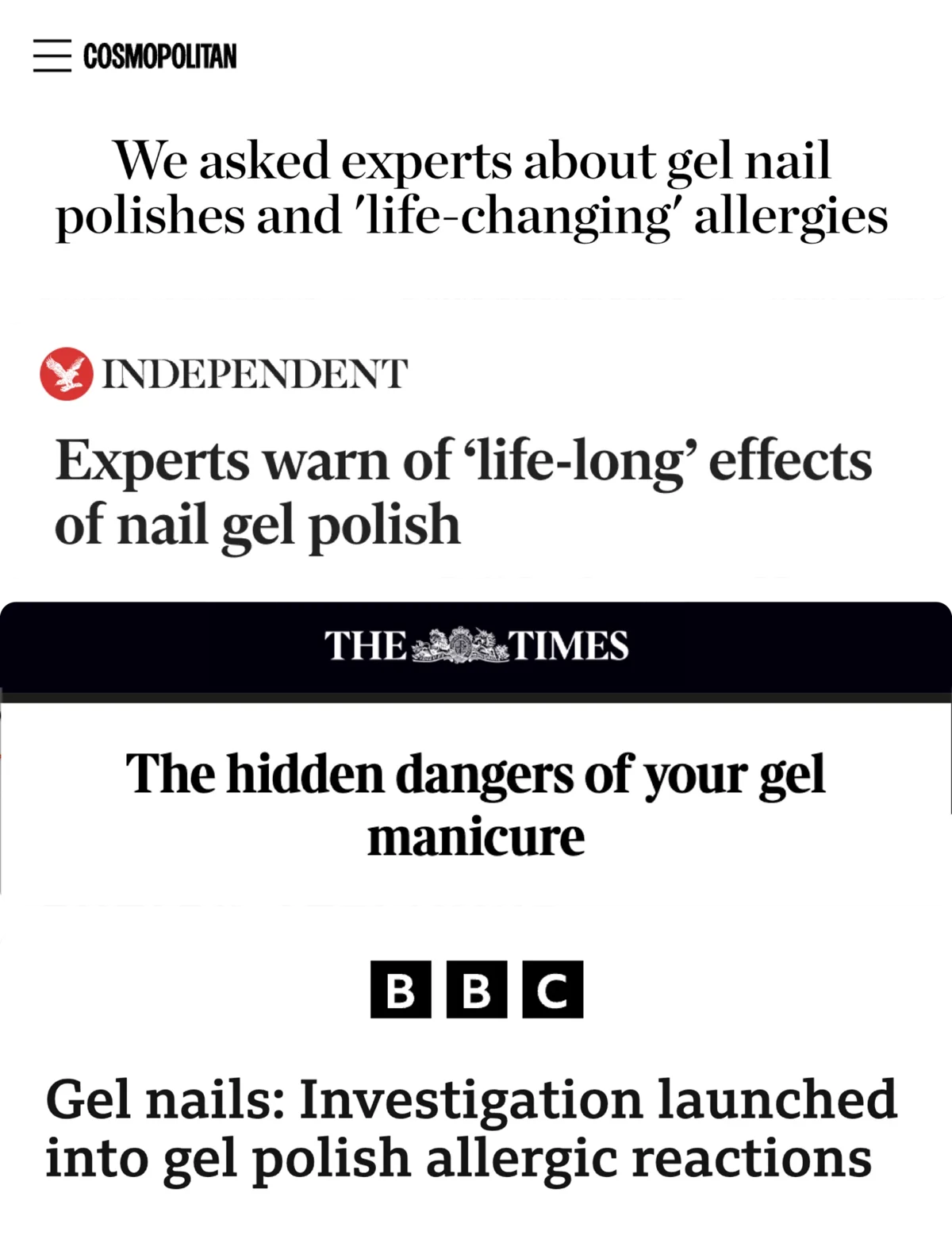
What causes allergic reactions to gel nails?
In most cases, gel allergies are linked to methacrylates — a group of chemicals used to harden gel under UV light.
They're effective, but also known allergens. The risk is especially high when uncured or partially cured gel comes into contact with skin.
Other ingredients can also contribute depending on the formula, including:
- Photo-initiators (used to trigger curing)
- Fragrances
- Preservatives and additives
Repeated exposure can lead to sensitisation, meaning you can develop an allergy even after years of using gels without issue.
What's the best alternative to gel nails?
The good news: you don't have to choose between gloss and comfort.
If you love the gel look but want to avoid the trade-offs, Glaize stick-on gels are designed to give you that salon finish — without curing at home.
Could Glaize gels work for me if I'm allergic to gel polish?
For many people, yes.
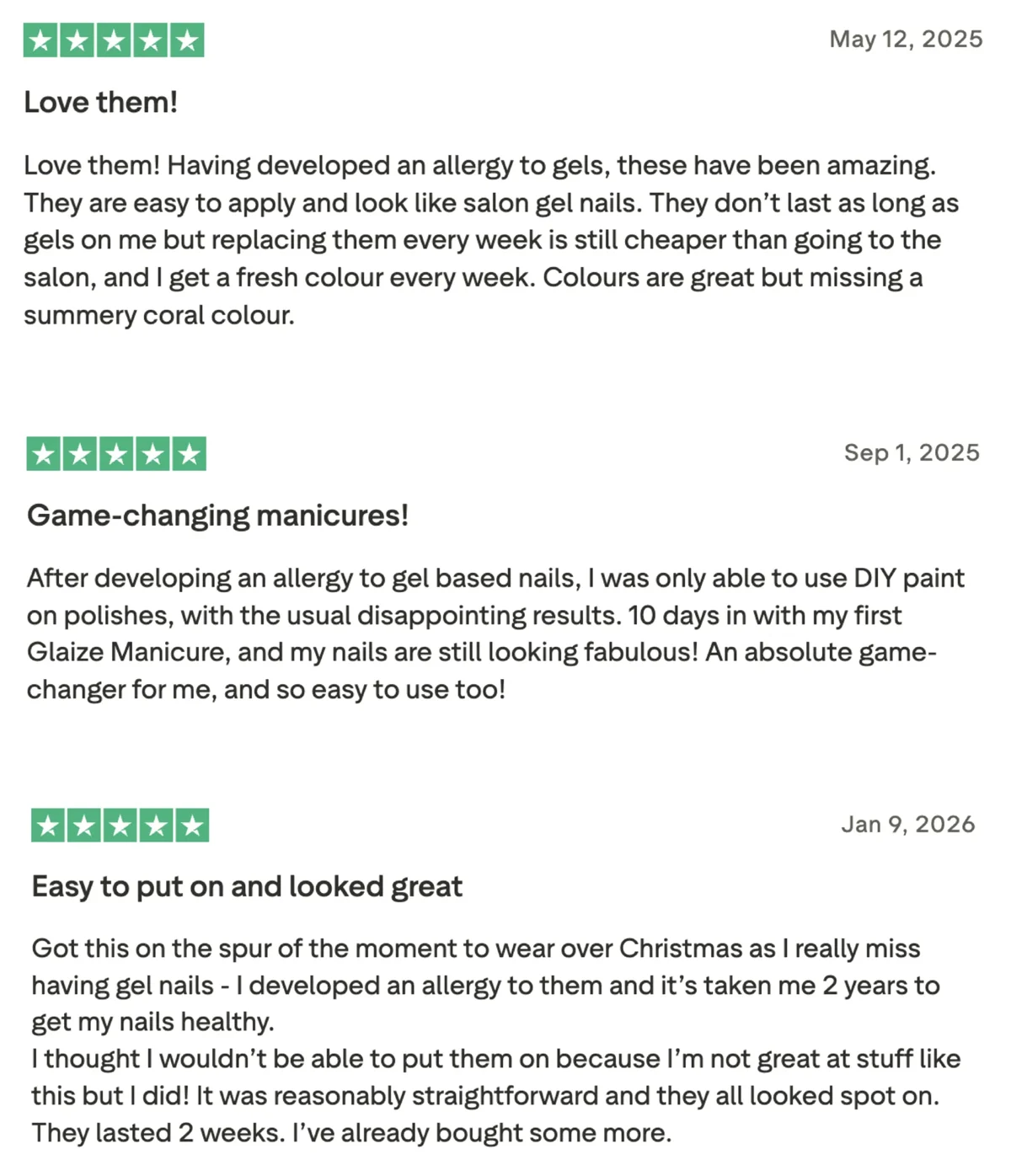
A lot of our customers find Glaize after traditional UV gels stop working for them — including those who've experienced allergic reactions in the past.
While everyone's skin is different (and we always recommend being cautious), Glaize can feel like a safer, more comfortable alternative because the gels arrive pre-cured, so there's no uncured gel sitting on the nail bed or skin.
We also offer allergy samples, so you can test before committing to a full set.
Find out more in our Help Centre.
What makes Glaize gels different?
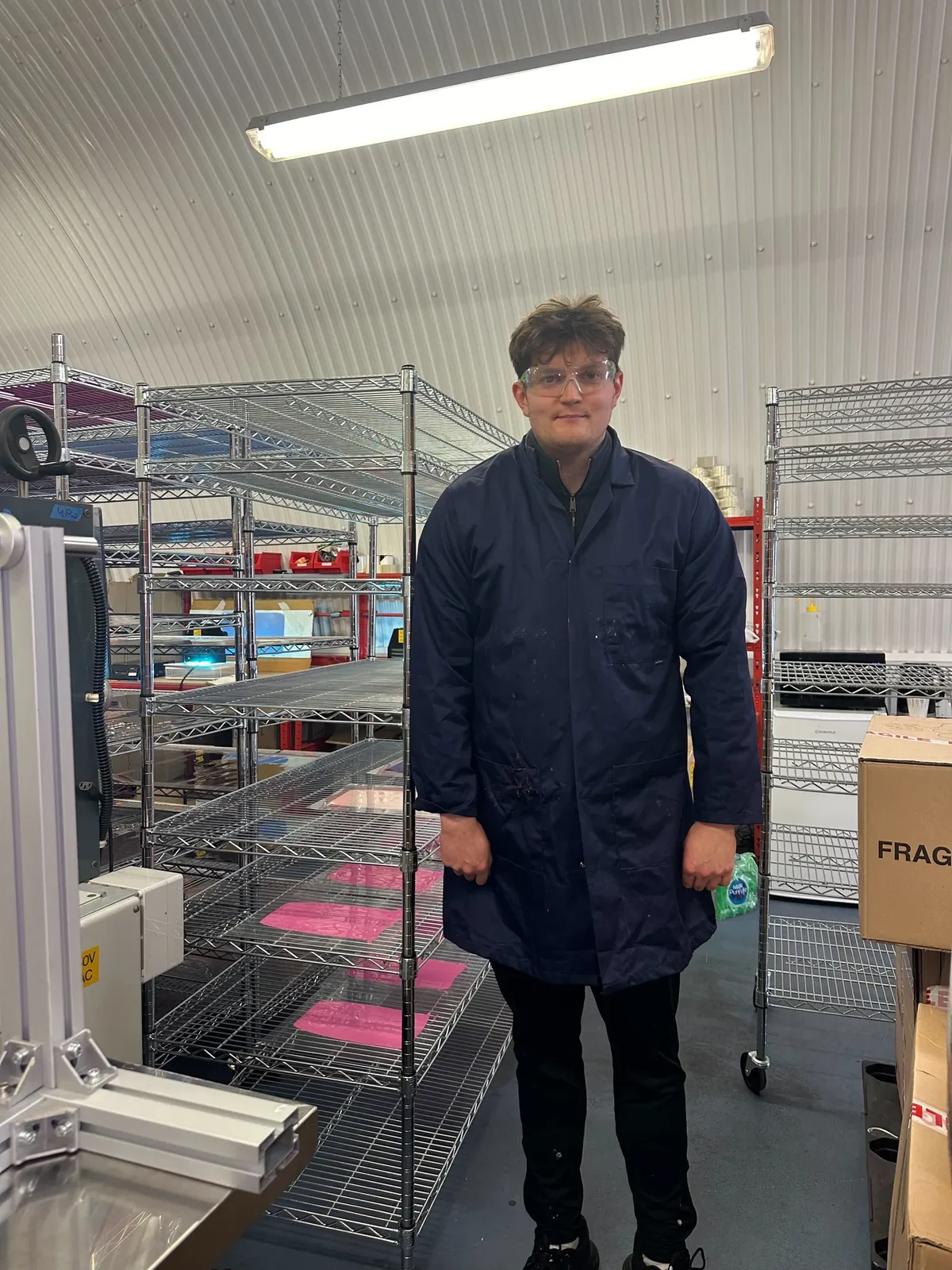
Here's how Dan, our in-house formulation chemist, explains it:
“Glaize gels arrive fully cured before they reach you — so you don't need a UV lamp at home, and there's no risk of under-curing.
Glaize gels are mainly made up of methacrylates, but unlike gels cured in a salon or at home, the gels you receive are fully cured using industrial UV lamps. This means the methacrylates are locked into the gel, rather than coming into contact with the nail before being cured.
We have also conducted animal-free testing that confirms that our gels are non-skin irritating. You can also rest assured that Glaize gels don't contain TPO or the following acrylates: (meth)acrylic acid, methyl methacrylate, ethyl methacrylate, 2-ethylhexyl acrylate, 2-hydroxyethyl methacrylate (HEMA). We always recommend testing a small sample first to be on the safe side if you do have any allergies or concerns."
Ready to make the switch?
Meet your new nail routine
Salon-gloss nails in under 10 minutes, with gentle removal and no UV lamp. Designed to look like real gel — without the salon trade-offs.